
What Kenya and Korea’s Museum AI Initiative Can Teach Transformation Leaders

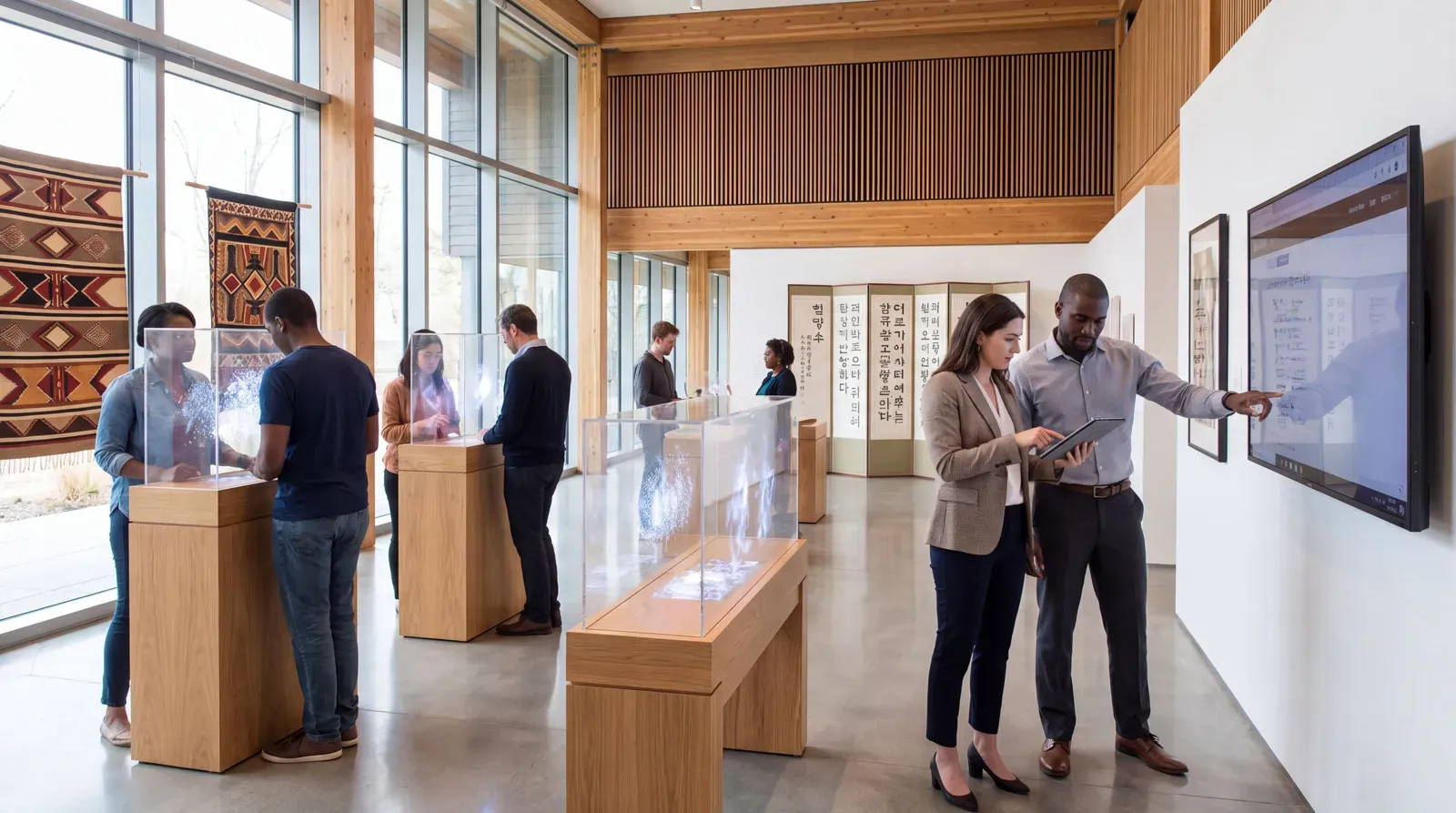
Kenya and Korea’s exploration of AI-driven museum transformation is bigger than interactive exhibits. It’s a useful test of whether institutions can connect fragmented collections, operational workflows and public experiences without letting the technology overshadow the mission. Business leaders should pay attention because the same implementation challenge exists in banks, universities, healthcare systems and manufacturers.
The initiative was reported in Kenya, Korea explore AI-driven digital transformation of museums - KBC Digital, dated 17 August 2026. Its central idea—using cooperation to explore how AI can support museums—offers a timely lesson: successful AI transformation starts with institutional capability, not a shopping list of clever tools.
Why museums are a serious transformation test
Museums may look like a niche setting, but they combine many of the hardest enterprise problems in one place. Their collections can include physical objects, handwritten records, images, audio, video and incomplete catalogue data. They serve researchers, school groups, tourists, local communities and international audiences. They also carry obligations around provenance, cultural authority, accessibility, copyright and conservation.
That makes a museum an unusually demanding environment for AI. A system might help classify an archive, translate exhibit material, improve discovery or answer visitor questions. Yet a plausible answer isn’t enough. The institution must know where information came from, who approved it and whether the system has flattened cultural context into a generic summary.
The wider news landscape reinforces the point. On the same reported date, KT and Seoul National University Hospital to Jointly Build Medical AI Transformation Platform, Creating a Standard Model for Public Healthcare AI described another Korea-linked institutional platform effort. Healthcare and museums have very different risk profiles, but both show why shared standards, reliable data and accountable operating models matter more than a flashy interface.
Start with a mission outcome, not an AI feature
The first practical step is to define the institutional result in plain language. “Deploy an AI guide” is a feature. “Help visitors discover relevant objects while reducing repetitive enquiries to gallery staff” is an outcome. The distinction sounds small. It changes the entire programme.
Choose a use case that is valuable, bounded and measurable. How to choose your first AI use case provides a useful way to move beyond enthusiasm and assess whether the workflow is ready for implementation.
A museum or cultural institution could begin with one of these:
- Enriching catalogue metadata for curator review
- Making approved collection records easier to search
- Translating selected visitor information with human validation
- Improving accessibility through descriptions or alternative formats
- Analysing visitor questions to identify gaps in interpretation
Before building anything, record a baseline. Depending on the use case, that could include search success, staff handling time, metadata completeness, visitor satisfaction or the percentage of generated outputs requiring correction. Set a target and identify who owns it. If nobody owns the outcome, the pilot is already drifting.
Build the digital foundations AI depends on
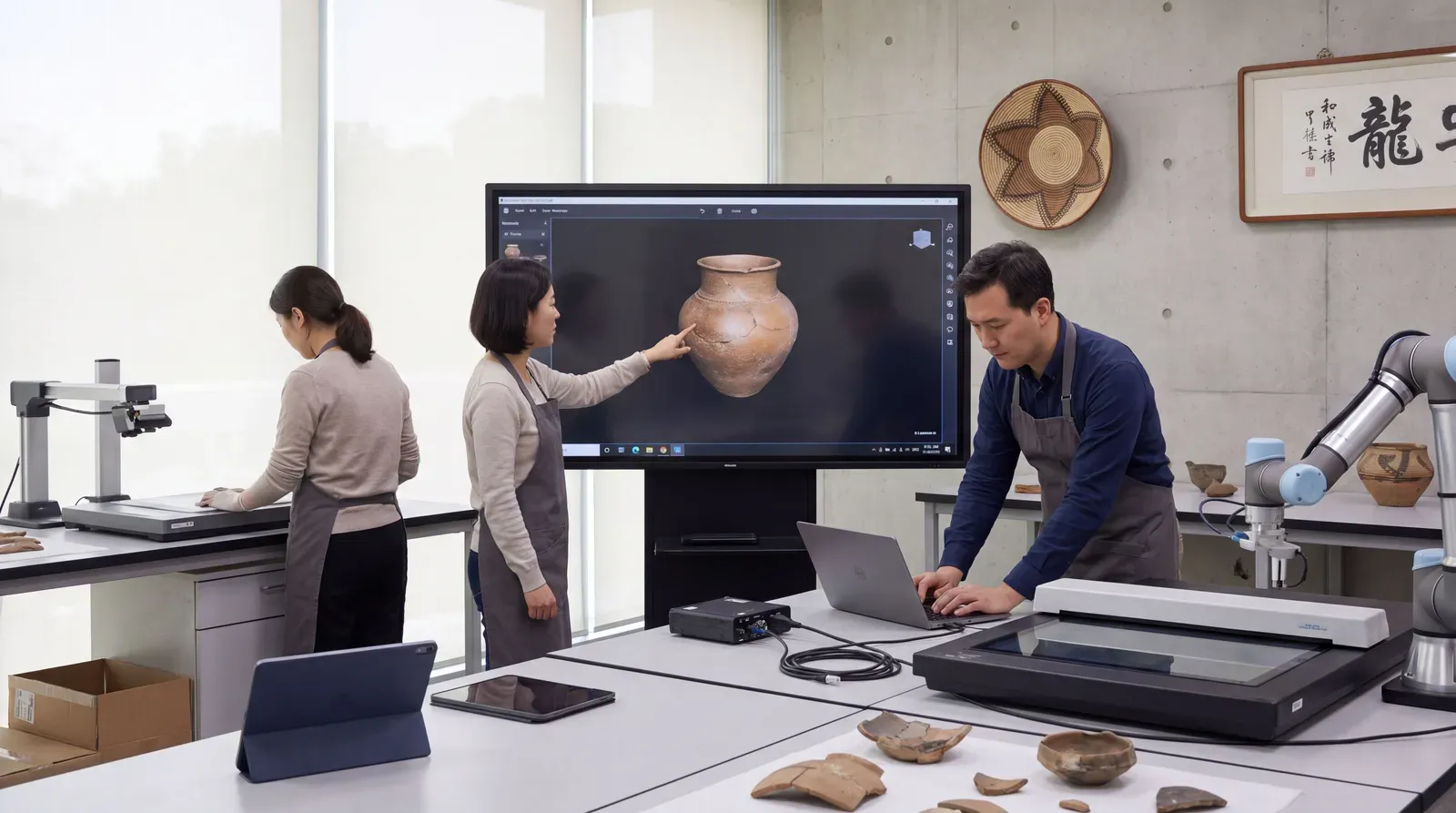
AI can’t repair weak information architecture by magic. If collection records are inconsistent, rights are unclear and integrations are brittle, a generative layer will expose those faults at speed. This is why the provocative question captured in “Can we skip Digital Transformation (DX) and go straight to AI Transformation (AX)?” It’s a question, dated 16 August 2026, matters well beyond Korea.
The short answer is usually no. You can run the work in parallel, but you can’t wish away missing foundations. What is digital transformation in 2026? explains why transformation is fundamentally an operating-model change rather than a software refresh.
Use a readiness review before committing to a platform:
| Readiness area | Evidence to examine | Decision gate |
|---|---|---|
| Data | Metadata quality, provenance and rights | Is trusted content identifiable? |
| Workflow | Handoffs, approvals and exceptions | Where must humans intervene? |
| Architecture | APIs, identity and system ownership | Can AI use approved sources safely? |
| Governance | Accountability, audit and escalation | Who can stop or correct the system? |
| Measurement | Baseline, target and reporting cadence | Can value and harm be observed? |
The source set supplied for this article clusters around a narrow period. That doesn’t prove a global trend by itself, but it does show how widely transformation language is being applied.
| Reported initiative | Publication date | Geography |
|---|---|---|
| Kenya–Korea museum exploration | 17 Aug 2026 | Kenya and Korea |
| Seoul public healthcare AI platform | 17 Aug 2026 | Korea |
| Laos digital week | 17 Aug 2026 | Laos |
| DX-to-AX question | 16 Aug 2026 | Korea |
Dates are useful context, not evidence of maturity. Leaders should judge each initiative by what reaches production, how it is governed and whether it improves a real outcome.
Design governance into the workflow

Museum AI creates risks that generic enterprise controls may miss. A translation can be linguistically smooth but culturally wrong. Automated metadata can reproduce old catalogue bias. A chatbot can present disputed provenance as settled fact. Digitised cultural material may also carry permissions that aren’t captured in ordinary copyright fields.
Governance therefore belongs inside the workflow. For each use case, classify content by sensitivity, document permitted sources and define when human approval is compulsory. Generated claims should retain links to source records. Corrections need an owner and an auditable route back into the underlying system.
This is where trust becomes operational rather than rhetorical. Why Trust, Transparency and Transformation Turn AI Spend Into Alpha explores why transparency and business value need to be designed together.
Cross-border collaboration adds another layer. Kenya and Korea bring different institutional contexts, languages, technical capabilities and cultural responsibilities. A sensible partnership model should separate what can be standardised—security controls, evaluation methods and technical interfaces—from what requires local authority, including interpretation, access and cultural consent.
Run a controlled pilot and measure the whole system
A credible pilot should test an end-to-end workflow, not just model performance. Start with a limited collection, visitor journey or staff team. Use approved data, define exclusions and keep a human review path. Then test normal cases, ambiguous cases and deliberate failure cases.
Measure four dimensions:
- Quality: accuracy, relevance, traceability and correction rates
- Operations: time saved, delays introduced and exception volume
- Experience: task completion, accessibility and user confidence
- Risk: harmful outputs, rights breaches, security events and unresolved complaints
Run the pilot long enough to encounter operational messiness. A polished demonstration can be produced in days; evidence of repeatable value takes longer. Before scaling, compare the result with the original baseline and include the full operating cost: integration, review, training, monitoring and content maintenance.
The final technology decision should follow the workflow design. Some institutions will buy a configurable platform; others will assemble specialised services around existing collection systems. Build vs. buy for enterprise AI can help leaders evaluate that choice without reducing it to licence price versus developer cost.
Scale capability, not just software
If the pilot works, resist the urge to copy it everywhere at once. Scale in waves based on data readiness, risk and institutional value. Reuse common components such as identity, retrieval, evaluation and monitoring, but allow local teams to control interpretation and approval.
Create a small cross-functional group spanning curatorial or domain expertise, operations, technology, security, legal and user experience. Its job isn’t to become an AI bureaucracy. It should maintain standards, support delivery teams and stop weak use cases before they become expensive distractions.
Kenya and Korea’s museum initiative is worth watching because it puts AI in a setting where trust, context and public value can’t be treated as afterthoughts. That’s the real lesson for CIOs and COOs: transformation succeeds when better data, clearer workflows, accountable decisions and useful technology move together.
If you’re ready to move beyond pilots and discover where AI can create measurable business impact, start your transformation journey with epoqx. The goal isn’t to add more AI. It’s to build a system that works better because AI is in it.
FAQ
- Where should a museum begin with AI transformation?
- Start with one bounded workflow tied to a measurable institutional outcome, such as improving collection search or reducing metadata review time. Establish the baseline before selecting technology.
- Can an organisation adopt AI before completing digital transformation?
- The work can overlap, but AI still depends on reliable data, integrated systems, clear process ownership and governance. Skipping those foundations usually shifts unresolved problems into the AI layer.
- How should museum leaders govern AI-generated content?
- Use approved sources, retain traceability, classify sensitive content and require human approval where cultural, legal or reputational risks are material. Corrections should be logged and fed back into the workflow.
- How should an AI museum pilot be measured?
- Measure output quality, operational impact, user experience and risk. Compare results with a pre-pilot baseline and include integration, review, monitoring and maintenance costs.
Sources
- Kenya, Korea explore AI-driven digital transformation of museums - KBC Digital — KBC Digital via Google News
- KT and Seoul National University Hospital to Jointly Build Medical AI Transformation Platform, Creating a Standard Model for Public Healthcare AI — finance.biggo.com via Google News
- Laos holding digital week to promote digital transformation and innovation - The Star — The Star via Google News
- “Can we skip Digital Transformation (DX) and go straight to AI Transformation (AX)?” It’s a question — Maeil Business Newspaper via Google News