
Manufacturing AI Transformation Is Moving From Pilot Talk to Factory Reality

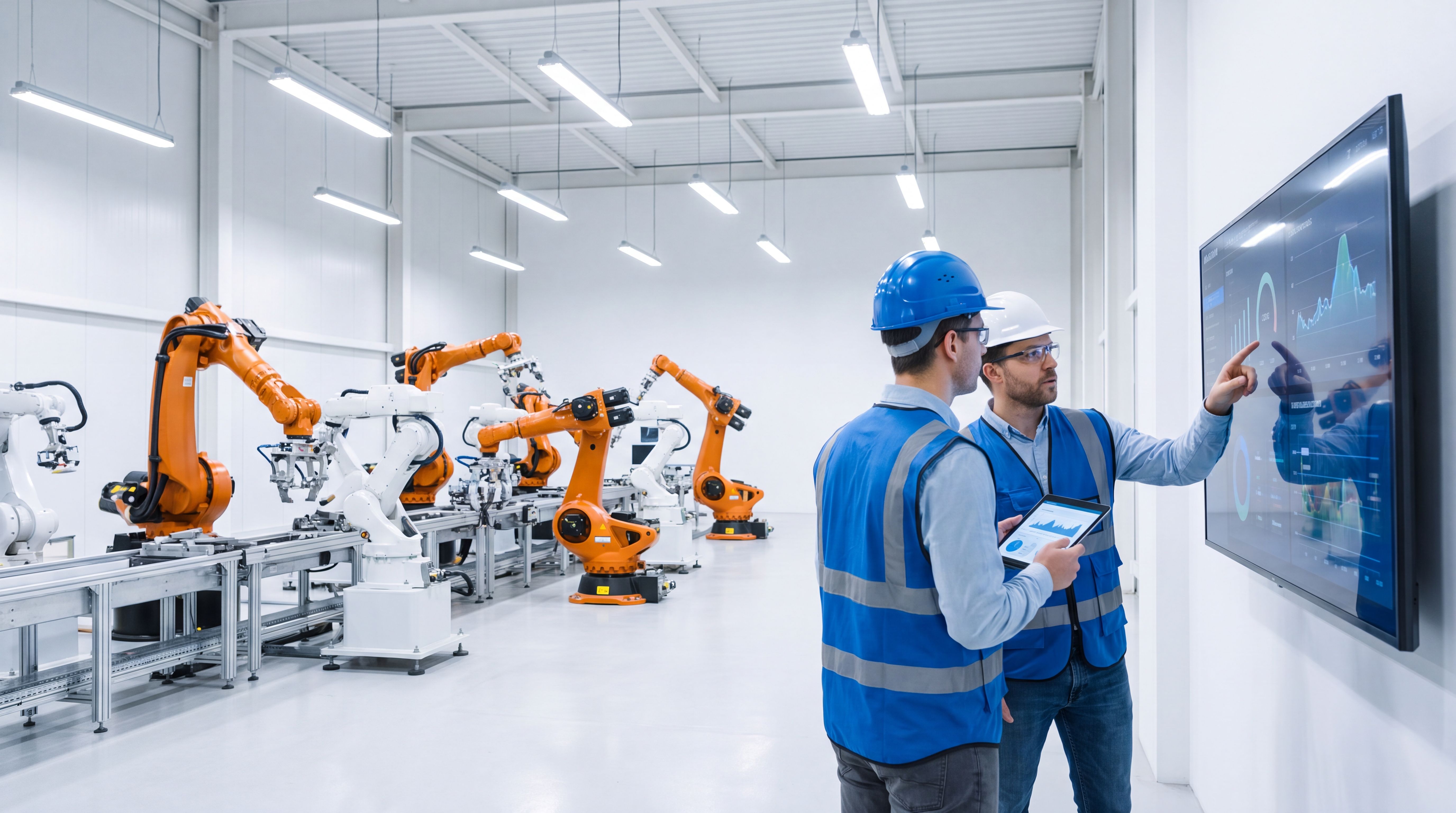
Manufacturing AI transformation has crossed an important line. It’s no longer a neat innovation project tucked inside a lab, or a board-slide promise about future productivity. In the U.S. industrial sector, AI is moving closer to the shop floor — into quality checks, predictive maintenance, supply planning, energy optimisation and real-time production decisions. That should get the attention of leaders far beyond manufacturing. Because when AI starts changing factories, it usually means the market has stopped asking “can this work?” and started asking “how fast can we scale it without breaking the business?”
The latest signal comes from KOTRA’s field-focused reporting on U.S. manufacturing AI adoption, covered in U.S. Industry Accelerates 'Manufacturing AI Transformation'... KOTRA Releases Field AI Adoption Trends Report - 아시아경제. The article itself is a market signal rather than a full data release, but the direction is clear: U.S. industry is accelerating AI transformation in physical operations, not just knowledge work.
That matters for Australia, Canada, New Zealand, England, Ireland, Scotland and the U.S. because many large organisations are wrestling with the same pattern. AI excitement is high. Proof-of-concepts are everywhere. But measurable operational impact is still uneven. Manufacturing is now becoming a useful stress test for the next phase of enterprise AI.
Why manufacturing is becoming the AI proving ground
Manufacturing is unforgiving. A chatbot can give a mediocre answer and someone may shrug. A production line can’t shrug. If AI makes a poor recommendation around machine settings, inspection tolerances, inventory availability or maintenance windows, the result can be waste, downtime, safety risk or missed orders.
That’s exactly why manufacturing adoption is such an important signal. If AI can be trusted in operational environments with complex constraints, legacy systems and physical consequences, it becomes much harder to dismiss it as another software trend.
The U.S. manufacturing base also remains large enough to matter globally. According to the U.S. Bureau of Labor Statistics, manufacturing employment was about 12.9 million people in June 2026, based on the BLS Employment Situation Summary. The sector is not a niche sandbox. It’s a major labour market, supply chain and productivity engine.
The pressure is visible in the broader industrial context too. The U.S. Census Bureau’s Manufacturers' Shipments, Inventories, and Orders data is one of the recurring indicators leaders watch because small changes in orders, backlogs and inventories can ripple quickly through operations. In that environment, AI doesn’t need to be magical. It needs to help people make better decisions faster, with less noise.
Here’s the practical point: manufacturing AI transformation is not about sprinkling machine learning over old workflows. It’s about connecting signals that already exist — sensor data, ERP records, maintenance logs, quality results, supplier updates, workforce schedules — and turning them into operational decisions.
That’s where many organisations get stuck. They buy the tool before fixing the system. We’ve seen the same pattern across sectors, and it’s why the distinction between AI-first vs. AI bolt-on: what's the difference? matters. Bolt-on AI adds features. AI-first transformation redesigns how work actually flows.
The signal behind the headlines
KOTRA’s field AI adoption trends report, as reported by Asia Economy, points to a simple shift: U.S. industry is moving from curiosity to implementation. The public summary does not provide detailed percentages, but it does place the report in July 2026 and frames the acceleration around manufacturing transformation.
That timing is important. By mid-2026, most executives have already spent several budget cycles exploring generative AI, automation and analytics modernisation. The novelty has worn off. Boards are starting to ask tougher questions. Where is the margin improvement? Where did cycle time fall? Which risk was reduced? Which customer promise became easier to keep?
A useful way to read the current market is not “AI adoption is high” or “AI adoption is low.” It’s more specific than that. Adoption is fragmenting into two camps:
The cybersecurity angle is easy to underplay, and that would be a mistake. A separate transformation piece, Why cyber security is the foundation of digital transformation - Emergency Services Times, makes a broader point that applies neatly to manufacturing: digital transformation without security is fragile transformation.
Factories are full of connected equipment, operational technology, vendor access, plant networks and ageing systems that were never designed for today’s AI-enabled data flows. Put bluntly, you can’t scale AI responsibly on a weak security foundation. You can demo it, sure. You can probably impress a few people. But you won’t run serious operations on it for long.
Where AI is actually creating value on the factory floor
Manufacturing AI transformation tends to create value in four practical areas. None are glamorous in the conference-keynote sense. That’s probably why they matter.
Predictive maintenance
Instead of maintaining equipment on fixed schedules or reacting after failure, AI can identify patterns that suggest a machine is drifting toward a fault. The business impact is straightforward: fewer unplanned stops, better spare parts planning and more stable output.
The hard part is not the model alone. It’s the workflow around it. Who receives the alert? How confident does the system need to be before action is taken? Does the maintenance team trust the data? Is the work order created automatically, or does someone still copy information between systems?
This is where the AI implementation gap shows up. Leaders often assume the technical model is the transformation. It isn’t. The transformation is what changes in the work. If that sounds familiar, it’s worth revisiting What is the AI implementation gap?, because the concept is painfully visible in industrial AI.
Quality inspection
Computer vision and machine learning can help detect defects, variation and process anomalies faster than manual inspection alone. In high-volume environments, even modest improvements can matter because small defect rates become expensive at scale.
But the operating model needs care. Human inspectors don’t disappear. Their roles shift toward exception handling, root-cause analysis and continuous improvement. The best systems make expert workers more effective; the worst ones create alert fatigue and quiet resistance.
Supply chain and production planning
AI can help manufacturers model demand changes, supplier delays, inventory constraints and production trade-offs. This is especially relevant for organisations serving multiple regions, where disruptions in one market can quickly affect another.
The leadership trap is over-automation. Planning decisions often involve commercial context that data won’t fully capture. AI should narrow options, surface risk and explain trade-offs. It shouldn’t become a black box that planners are expected to obey.
Energy and resource optimisation
Industrial energy use is a serious cost and sustainability lever. AI can help optimise machine settings, heating and cooling patterns, production sequencing and resource consumption. These use cases are attractive because they link operational performance with cost control and environmental goals.
Again, the issue is integration. If energy insights sit in a dashboard nobody uses during production planning, they’re just expensive decoration.
The build-versus-buy question is getting sharper
As AI moves deeper into operations, the old procurement question becomes more strategic: should you build, buy or combine?
Buying packaged AI capabilities can make sense for common problems such as visual inspection, scheduling optimisation or maintenance analytics. Building may be justified when the process, data, constraints or competitive advantage are highly specific. Most enterprises will land somewhere in the middle.
The key is to avoid religious arguments. “We must build everything” is usually wasteful. “We’ll just buy a platform” is often naive. Leaders need a clear view of where differentiation lives and where speed matters more. The epoqx guide on Build vs. buy for enterprise AI is useful here because it frames the decision around business capability, not vendor fashion.
The same logic applies outside manufacturing. Banks, insurers, energy companies, retailers, public services and logistics firms all face versions of this choice. AI transformation is not one decision. It’s a portfolio of decisions, each with different risk, data, workflow and change-management requirements.
A slightly uncomfortable truth: many organisations are still evaluating AI like they evaluated SaaS in 2016. Feature lists. Demos. Licence costs. Maybe a security questionnaire. That’s not enough anymore. AI systems interact with decisions, data quality, organisational behaviour and operational risk. The evaluation model has to mature.
For a deeper look at that challenge, Enterprise AI Solutions Are Everywhere. Here’s How Leaders Should Actually Evaluate Them makes the point well: the market is crowded, but the real question is whether the solution can produce a measurable business outcome inside your environment.
What leaders in other markets should take from the U.S. signal
The U.S. manufacturing signal matters well beyond the U.S. because industrial AI maturity tends to travel through supply chains. A manufacturer in Canada, England or Australia may not copy the same vendor stack, but it will feel the same competitive pressure: better uptime, faster fulfilment, tighter margins, more resilient planning.
The pattern also extends to Ireland, Scotland and New Zealand, where smaller domestic markets often make operational efficiency and export competitiveness even more important. AI won’t solve structural constraints by itself, but it can help organisations make better use of scarce labour, specialist expertise and capital equipment.
Canada’s AI market is also attracting investor and enterprise attention. The article Enterprise AI Stocks Reshaping Canada's Digital Transformation Story - Kalkine Media reflects a broader market narrative: enterprise AI is now part of the digital transformation story, not a side category.
But here’s the provocative bit. The winners won’t be the organisations with the most AI pilots. They’ll be the ones with the cleanest path from use case to workflow change to measurable operational result.
That means leaders should ask sharper questions:
- Which operational constraint are we trying to remove?
- What decision will AI improve, automate or accelerate?
- What data do we need, and is it reliable enough?
- Who owns the workflow after the model makes a recommendation?
- What metric will prove this created value?
- What security and governance controls are required before scale?
If those questions feel basic, good. Basic is where many AI programmes fail. The shiny parts get attention, while the boring parts decide whether value shows up.
From AI pilots to operating model change
The next phase of manufacturing AI transformation is less about experimenting and more about industrialising. That requires a different leadership posture.
CIOs need to think beyond model access and platform architecture. COOs need to connect AI to throughput, quality, resilience and cost. Innovation teams need to stop treating pilots as the finish line. Transformation leaders need to make adoption feel less like a technology rollout and more like a better way to run the business.
A practical starting point is choosing the right first use case. Not the flashiest one. Not the one a vendor demoed last week. The right one. It should be meaningful enough to matter, narrow enough to deliver, and connected enough to teach the organisation how AI will scale. The epoqx guide on How to choose your first AI use case lays out that discipline in a way many teams need before they spend another quarter testing disconnected tools.
The broader definition of transformation is also changing. In 2026, digital transformation is no longer just cloud migration, process digitisation or modern apps. It’s the redesign of work around intelligent systems, data flows and human decision-making. That shift is explored in What is digital transformation in 2026?, and manufacturing is becoming one of the clearest examples.
The organisations that get this right will not talk about AI as a separate initiative for long. It will become part of maintenance strategy, quality management, planning cadence, workforce enablement and performance governance. Less theatre. More operating rhythm.
That’s the real lesson from the U.S. manufacturing signal. AI transformation is becoming physical, operational and measurable. The era of “look what the model can do” is giving way to “look what the business can now do differently.” About time.
If you're ready to move from AI curiosity to measurable business impact, epoqx can help you identify the right opportunities, redesign the workflows around them and build the systems needed to scale. Discover how AI can create practical value for your organisation and start your transformation journey with epoqx.
FAQ
- Why is manufacturing a strong indicator of enterprise AI maturity?
- Manufacturing has real operational constraints, physical assets and measurable outcomes. If AI can improve uptime, quality or planning in that environment, it signals that enterprise AI is moving beyond lightweight experimentation.
- What are the most practical AI use cases in manufacturing?
- Common high-value use cases include predictive maintenance, quality inspection, production planning, supply chain optimisation and energy management. The best use case depends on the organisation’s data, workflow maturity and business constraints.
- Should manufacturers build or buy AI systems?
- Most organisations will use a mix. Buying can work for common capabilities, while building may be better where proprietary processes, data or competitive advantage matter.
- What usually prevents AI pilots from scaling?
- Pilots often fail to scale because the workflow, data ownership, governance, security and change-management model are not designed upfront. The model may work, but the organisation is not ready to operationalise it.